
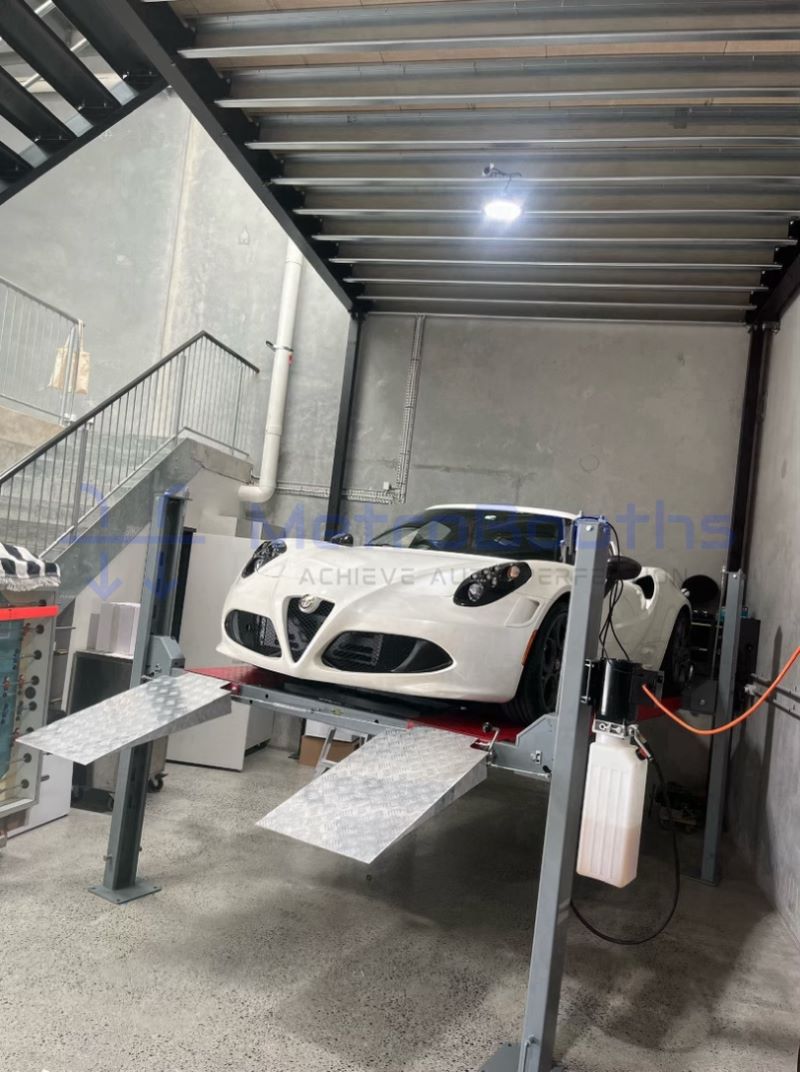
If you’re putting a hoist into your workshop, the floor matters as much as the hoist itself. A car hoist puts heavy point loads through a handful of bolts, and the slab underneath has to carry that safely. We get asked this constantly by workshops across Sydney, Melbourne, Brisbane and right around the country, so here’s a straight answer.
Here’s the short version: there’s no single thickness that suits every hoist. The right slab depends on the hoist type, its rated capacity, and the manufacturer’s installation specification. Your installer, and where there’s any doubt a structural engineer, confirms your floor is up to it before anything gets bolted down.
What Actually Drives the Requirement
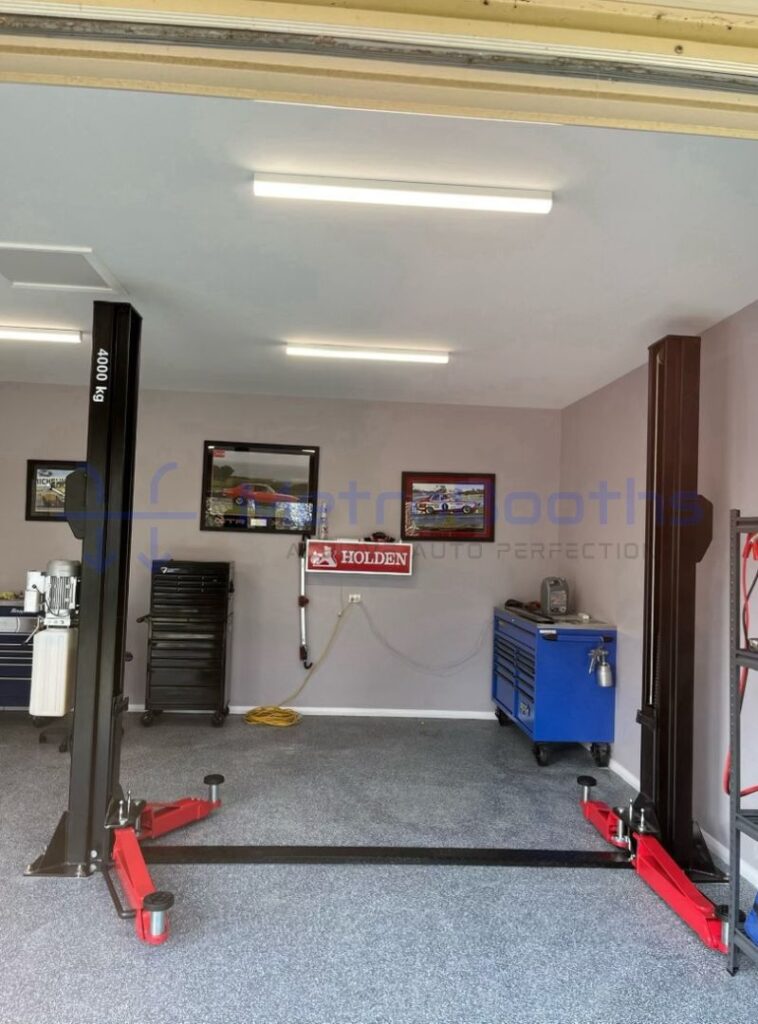
There isn’t one magic number because every hoist loads the floor differently. A two-post hoist hangs the full weight of the vehicle off two columns, so it concentrates load through the baseplate bolts. A four-post hoist spreads that load across four posts and a wider footprint. A scissor lift sits low and loads the slab differently again. The hoist type sets the rules, not a blanket figure.
Three things decide what your slab needs to do.
The hoist type and its rated capacity
A standard two-post hoist for cars and light commercials carries a different load to a heavy four-post used for 4WDs and vans. Higher capacity means higher loads through the anchor points, which usually means a thicker, stronger slab. The capacity is on the hoist’s data plate and in its manual. That’s where the floor spec starts.
The manufacturer’s installation specification
Every reputable hoist ships with an installation manual that states the minimum concrete thickness, the minimum concrete strength, the anchor type, and the edge distances the bolts need from any joint or slab edge. This is the document that governs your install. If a slab doesn’t meet the manual, the hoist shouldn’t go in until it does.
The condition and make-up of your existing slab
Two slabs the same thickness aren’t always equal. Reinforcement, how well the concrete was cured, whether there are control joints or cracks nearby, and what’s underneath all affect whether it can take a hoist. An old slab that looks fine on top can still be a problem. This is exactly why someone qualified checks it rather than guessing from the surface.
So What’s the Right Number for My Hoist?
This is the part everyone wants a single figure for, and the honest answer is that the figure has to come from your specific hoist’s installation manual, not a blog. The manual sets the minimum slab thickness, the minimum concrete strength, and often a minimum cure age before anchors can go in. Heavier hoists, certain anchor systems, or a marginal slab push those requirements up.
The point isn’t to be cagey. It’s that a hoist is only as safe as what it’s bolted to, so the spec has to come from the right place: the manufacturer for your model, and a structural engineer where the floor is old, unknown, or marginal. Tell us the hoist you’re looking at and the floor you’ve got, and we’ll point you to the spec that applies.
Signs Your Slab Might Not Be Up to It
You can’t fully judge a slab by eye, but a few things are worth flagging to your installer before they quote. If any of these apply, mention them early so the floor gets assessed properly rather than discovered on install day.
The slab is thin, old, or unknown
If you’re in a leased unit and nobody can tell you how thick the floor is or how it was built, that’s a question to answer, not assume. Older industrial slabs vary a lot. Where there are no records, a core test or engineer’s assessment settles it.
Cracks, movement, or a hollow sound
Visible cracking near where the posts would sit, sections that have lifted or sunk, or a hollow sound when you tap the surface can all point to problems underneath. These don’t automatically rule out a hoist, but they need looking at before anchoring.
The hoist would sit near a joint or edge
Anchors too close to a control joint, an expansion joint, or the edge of the slab can fail to hold properly. Hoist manuals specify minimum edge distances for exactly this reason. Where the hoist sits on the floor matters as much as how thick the floor is.
Who Confirms the Floor Is Safe?
This is the bit that protects you. Whether your slab suits a hoist is confirmed by your installer working to the hoist manufacturer’s specification, and where there’s any doubt, a structural engineer. It’s not a call to make off a YouTube video or a mate’s opinion, because the consequences of getting it wrong are a falling vehicle.
For straightforward installs on a known, compliant slab, the installer working to the manual is generally enough. Where the floor is old, undocumented, marginal, or the hoist is high-capacity, an engineer’s assessment is the sensible step. A core sample tells you the real thickness and strength, and an engineer can confirm whether the slab carries the load or needs remediation such as a thickened pad or a new pour.
At MetroBooths, this is part of how we help workshops spec the right hoist for their actual site, not just sell a box. If you tell us about your floor and what you want to lift, we’ll point you to the hoist that suits it and flag anything that needs checking first.
Matching the Hoist to Your Floor (Not the Other Way Around)
Often the smartest move is choosing a hoist that suits the slab you’ve already got, rather than re-pouring concrete you didn’t budget for. There’s real range across hoist types, and the right pick depends on your floor, your ceiling height, your bays, and what you work on.
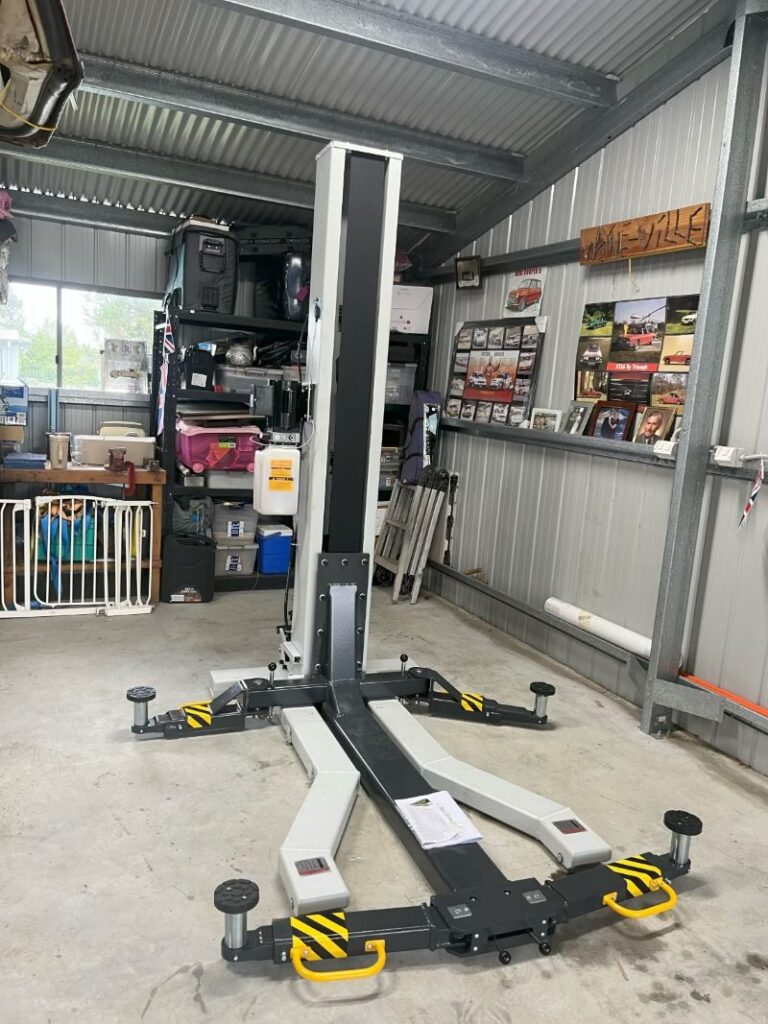
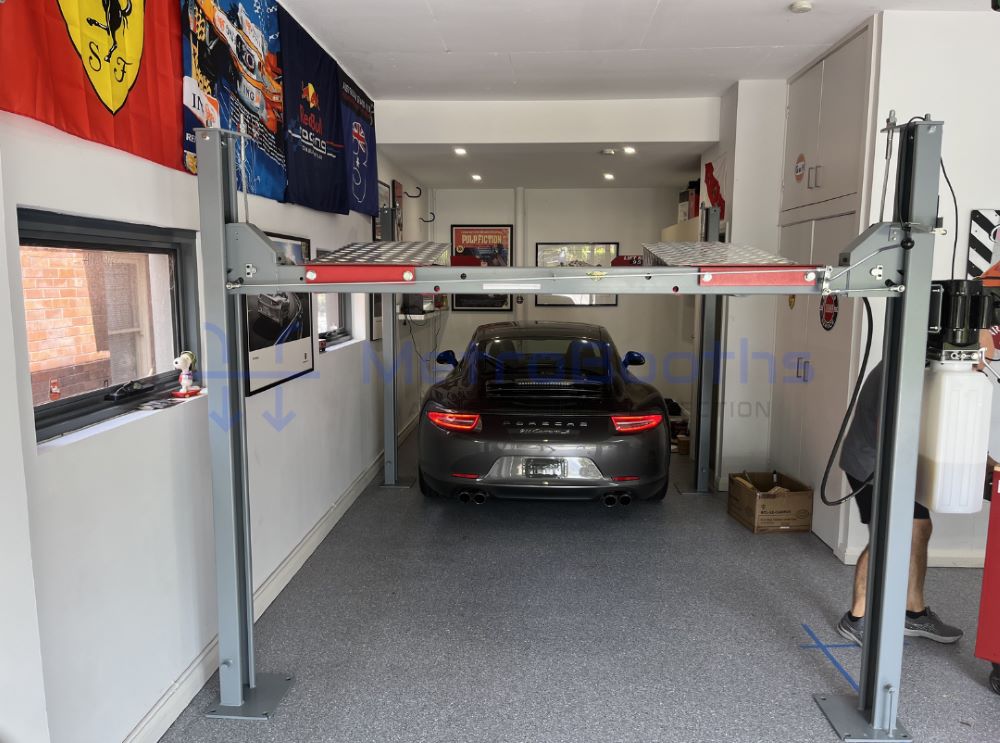
A two-post hoist is the workshop standard for cars and light commercials, and it’s the type most slab questions are about because of how it loads the columns. If your floor or layout suits a wider footprint, a four-post hoist spreads load differently and is popular for storage and heavier vehicles. Where space or slab depth is tight, a scissor lift or low-rise option can be worth a look.
Have a browse of our hoist range, then talk to us about your site. We supply and install across Australia, and we’d rather get the floor question sorted up front than after the concrete’s drilled.
Frequently Asked Questions
How thick does concrete need to be for a 2 post hoist?
There’s no single thickness that suits every two-post hoist, because capacity and anchor type change the requirement. The real figure comes from your specific hoist’s installation manual, which states the minimum slab thickness and concrete strength for that model. Where the slab is old or unknown, a structural engineer or a core test confirms it. Tell us your hoist and floor and we’ll point you to the right spec.
Can I install a car hoist on an existing workshop slab?
Often, yes, if that slab meets the hoist manufacturer’s minimum thickness, strength, and edge-distance requirements. Plenty of workshops install onto an existing floor without issue. The catch is that you need to know the slab actually meets the spec rather than assuming it does. If the floor is undocumented, cracked, or marginal, get it assessed before anchoring. A core sample and an engineer’s check settle it.
What concrete strength is needed for a car hoist?
Most car hoists specify a minimum concrete compressive strength in their installation manual, and higher-capacity hoists can need more. Strength isn’t only about the mix either: how the slab was cured and reinforced matters, which is why a fresh pour usually needs time to reach strength before anchors go in. Always work to the figure in your hoist’s manual and confirm with your installer or engineer for your site.
Do I need an engineer to check my floor before installing a hoist?
Not always, but sometimes yes. For a straightforward install on a known, compliant slab, the installer working to the manufacturer’s specification is generally enough. You should involve a structural engineer when the floor is old, undocumented, cracked, or marginal, or when you’re fitting a high-capacity hoist. An engineer can confirm thickness and strength via a core test and tell you whether the slab carries the load or needs remediation. If in doubt, get it checked. It’s cheaper than a failed install.
What happens if my concrete floor isn’t thick enough for a hoist?
If your slab doesn’t meet the hoist’s specification, the hoist shouldn’t be installed until the floor is brought up to standard. Anchoring into an inadequate slab risks the anchors pulling out under load, which means a vehicle coming down. The usual fixes are a thickened concrete pad in the hoist footprint, or a new section of slab poured to the manufacturer’s spec. An engineer advises the right option for your site.
Get the Floor Question Sorted First
A hoist is only as safe as the slab it’s bolted to. Get the floor right, work to the manufacturer’s spec, and bring in an engineer when there’s any doubt. Do that, and the install is the easy part.
Talk to MetroBooths about your workshop floor and what you want to lift, and we’ll help you spec the right hoist for your site. Call us on 0433 426 291 or email sales@metrobooths.com.au, and we’ll give you a straight answer.
Get A Free Quote
Contact us for a free, no-obligation quote on your Spray Booth needs.